I really would love to wish everybody a happy new year, but even if one is possible, I am not seeing how we in the region are preparing ourselves to receive it. I recommend the following two somber but solid speeches below from CARICOM chairman, Mia Motley and the Caribbean’s most senior statesman, Prime Minister Ralph Gonzalves, for those who want to wake up and have a crack at promoting the best possibility of us having one.
A people unprepared to go to war are unfit for territory. Show me a people that have attained or maintained their territorial rights through peaceful negotiations, even after the UN charter. (If you find them tell them to talk to Ukraine and Palestine.) Home owners, farmers, our security forces and security companies all understand that peace and safety is best secured by threat of bullet. Signs, locks and burglar bars have no such sure guarantee. Even the biblical writers understood that the price of territorial conquest was warfare. Revelations 19:11-18
Of the more pernicious consequences of Jamaica’s long equivocation in ridding herself of the British monarchy is the fact that Jamaica’s children are still taught in schools the utter nonsense that the British ‘granted’ us independence. The historical truth is that the British never had the knack of granting anything to the Caribbean but more burdensome taxation and oppressive legislation. Whatever was conceded was exacted by war or threat of war, which we still unfortunately refer to in our history books as ‘rebellion’.
Anyone wonder then the culture dysphoria of our young people?… their detachment from the nationalism of their parents and grandparents? Passion requires an enemy. If none exists, it creates one. The monster of murderous crime is what you get when you divorce readiness to kill from love of country. They belong together; and that union is called patriotism. This is the reason we have lionized Bogle, Sharpe, Nanny. They seeded Jamaica land we love.
Is it not curious that the Jamaican coat of arms bears the image of a people viciously exterminated from the island. What should we make of that? Is that guilt? boast? detachment? Here is why I think it is the latter:
The Caribbean gets its name from the Kalinago people, who along with the Tainos are still very much a living people, even if they have utterly disappeared from Jamaica and in general, the greater Antilles. In both cases, British contempt carelessly misconstrued the language for the people. Arawak was the language of the Tainos and Kalina the language of the Kalinago. Karina (as it is pronounced in some places) somehow became corrupted to ‘Carib’ and our region has taken its name from that people.
A fiercely independent people, they were the British’s worst nightmare. In fact, Kalinagos will tell you that the British invention of Carib ‘cannibalism’ was their response to the sheer terror they evoked in war, in marked contrast to the much easier to handle Tainos.
They are Mongoloid, the last wave of Asiatic migrants to the ‘New world’ (How I hate that term, but it is superior to ‘the Americas’, which unduly credits Vespucci with ‘discovery’) from over the Bering Straits in the last Ice Age. They were conquering the Caribbean from the South while Spain and Britain were conquering from the North.
If anywhere in the next 200 – 300 years, the Chinese do in fact colonize the Caribbean, they can justly claim that they are simply finishing what they had started over a millenia ago, in that the British and other European colonial clusters and whatever temporary interruption succeeded them from disorganized African and Indian diasporas claiming independence but unable to unite to secure their civilization, were merely a delay of a couple hundred years.
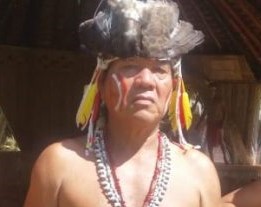
Dominica is the best place on earth to really get a Caribvision (Kalinago perspective) for a number of reasons: This is where they …
- have their largest population (5% of the island population) and
- hold their largest territory (20% of the total island landmass). The process of legal endowment of this ‘generous British land grant’ (I employ these words solely for the amusement of my newfound brother Nicotouboulou, who I am sure will soon be Kalinago chief) was initiated in 1903, and of all days on the 4th of July, the birthday both of the chief architect of Caribbean unity, Norman Washington Manley, born ten years earlier to the day, and the birthday of the Caribbean Community (CARICOM) which came into being with the signing of the Treaty of Chaguaramas that same day in 1973. (This should settle the debate on the most auspicious day for celebrating Caribbean Day.)
- have mostly integrated (by inter-marriage) into the larger society (while maintaining a pure-bred core at the center of Kalinago territory), The current president of Dominica is of Kalinago descent, so is the wife of the Prime Minister. Hence Kalinago views and values have largely been absorbed by the majority black population.
The Dominican national motto is translated “After God, the Land”. Two incidents in my first week demonstrated clearly its meaning.
The first was an elderly Dominican who chided me when I showed reluctance to walk through private property to get to the beach. He told me in no uncertain terms that the difference between us Dominicans and you Jamaicans is that every Dominican understands that that is their beach and ‘nobody from nowhere’ can come and build any private residence or hotel or anything at all that can block a Dominican access to their beach.
The second was when a factory owner explained the reason it was hard to maintain a steady work force was that every last worker not only was a land-owner, unsaddled with rent, but also a farmer. They work because, yes they need the money, but with the attitude of somebody doing you a favor. “You can never make me starve, so if you want to see me come back Monday morning, treat me good.”
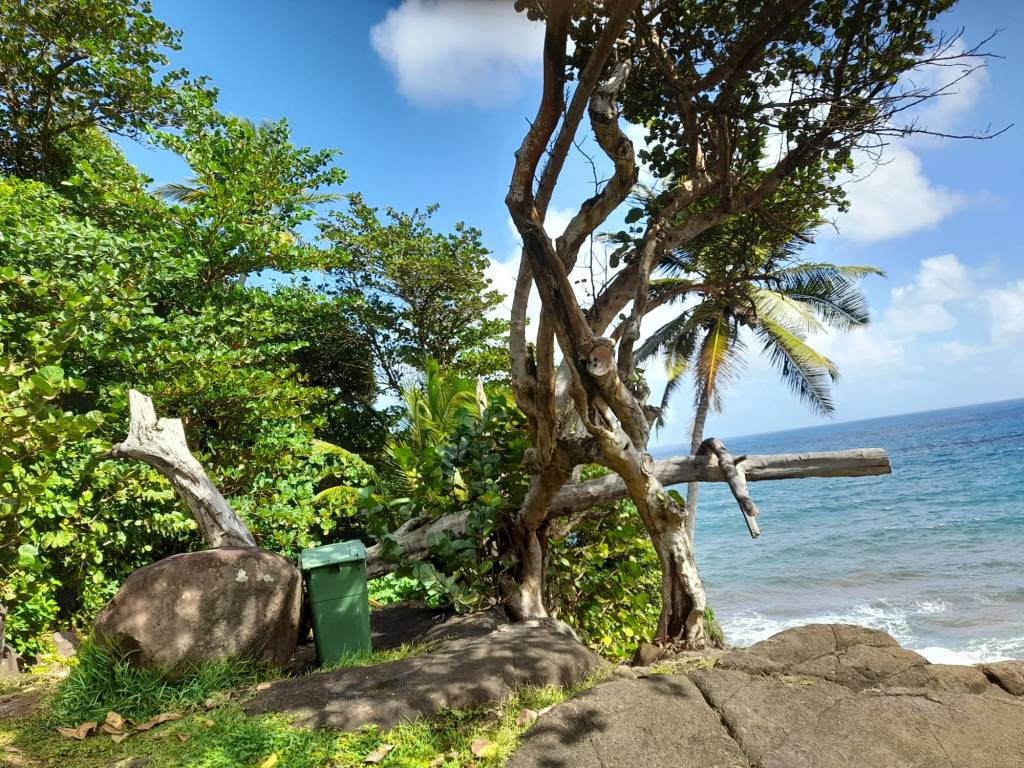
There is so much I am learning here in Dominica and I believe Jamaicans have a great deal to learn from the Eastern Caribbean that will perhaps adjust our super-sized egos, which certainly have tremendous value, but needs to find its place.

