Neither the United States of America nor Jamaica are Christian nations. Although the religious right in both countries are known for spinning a yarn of imaginative narrative inferring the contrary, the facts are clear.
The history of the Church in the Jamaican Genesis, as is the case with the entire indigenous population of the Americas, and for the most part, Africa and Asia with few exceptions, is a tale of terrorism under the sardonic guise of a civilising mission. It would be an interesting debate as to which religion historically had the greater capacity for barbarity: Islam or Christianity?
In fact, it was the United States itself that led the mass movement transitioning formerly Christian nations to secular democracies and the policy of separation of church from state, thus curtailing the power of one of the most pernicious power-wielding institutions known to humanity – The Christian church.
It is stretching the truth a little to claim as do some historians that the founding fathers of the United States were all church-attending Christians. Quarter of the cosigners to the United States Declaration of Independence were deists – Free-thinking Freemasons, more concerned about unyoking the affairs of state from church meddling and containing the unchecked influence of formally organised religion in human society. The sentiment became commonly shared amongst the founding fathers who all were fleeing some form of religious persecution from other Christians from competing churches wielding the powers of state against them.
France would immediately follow their footsteps and eventually too almost all of Europe. Even those few nations which retained state churches and vestiges of Christian identity in their constitutions, such as the United Kingdom and Norway, effectively moved towards secularist practice in governance and law.
They are actually only a handful of Christian nations left. About 13 countries still officially designate Christianity as their state religion in their constitutions and jurisprudence frameworks:
Armenia was the first state in history to adopt Christianity as its official religion during the rule of King Tiridates III, of the Arsacid dynasty in 301 A.D., 79 years ahead of the Treaty of Thessalonica which established Nicene Christianity as the official religion of the Roman Empire, which at that time included Greece and Rome. According to tradition, the Armenian Apostolic church originated in the missions of Apostles Bartholomew and Thaddeus (Jude) in the 1st century. St. Gregory the Illuminator was the first official primate of the church. The three Great Churches: The Armenian Apostolic church, The Greek Orthodox Church, and the Roman Catholic Church all claim their beginnings in Pentecost of 33 AD. The Greek Orthodox Church formally separated from the Roman Catholic Church during the Great Schism of 1054 A.D. which marked its beginning as a distinct branch of Christianity.
Vatican City was established as a sovereign theocracy governed by the Pope when Italy went secular in 1929.
The Dominican Republic under Rafael Trujillo became officially Catholic by signing a concordat with the Vatican on 16th June 1954, during the pontificate of Pope Pius XII.
Argentina, Costa Rica, Liechtenstein, Malta & Monaco are all also Catholic.
Denmark and Iceland are (officially) Lutheran. Tuvalu is Calvinist. And that’s it.
Other countries like Zambia, Samoa, Tonga, and Georgia may strongly identify with Christianity in their constitutions, but do not have a formal state church nor do they constitutionally enshrine Christianity as the official religion.
Meanwhile in the East, the trend of State secularity and non-aligned or state-endorsed religion is catching on much more slowly. Of the 50 or so countries with Muslim-majority populations, a full half of these are officially Islamic in constitution with Sharia law as the jurisprudential practice.
With current trends sustained, the global Islamic population is due to eclipse Christianity within a few decades and secular humanists will probably follow suit within the next 100 years or so.
There are those who argue that the separation of church and state was in fact a bad idea and that the West took a wrong path when it embarked upon the journey of secular humanism as the best guiding philosophy for the governance of the nation state. This notion deserves a considered response.
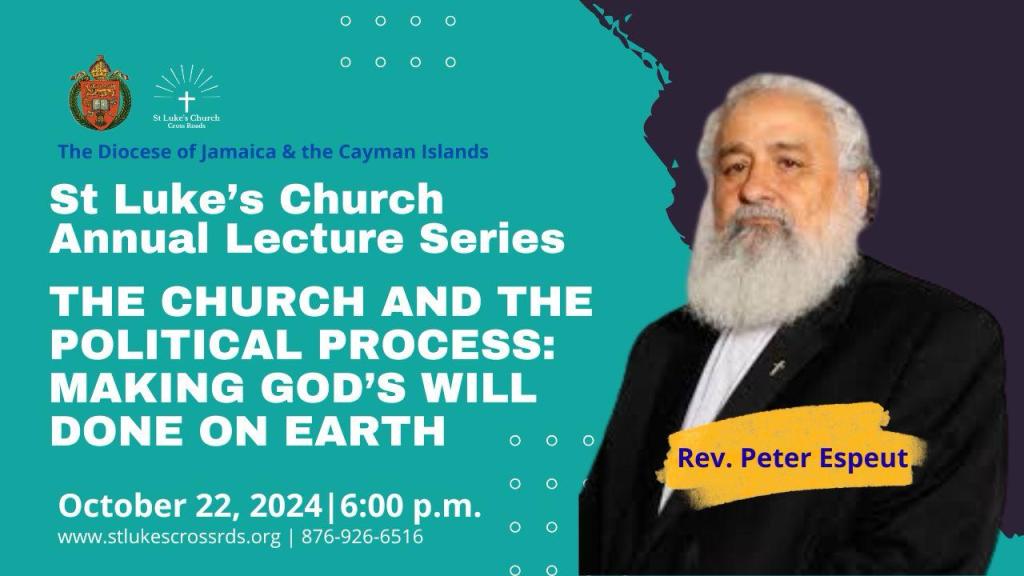
In the mean-time, let me lend my blog to give free advertising to an upcoming event related to the question, and giving much promise in informing such a response.