Unregulated religion wreaks havoc upon human society. We in the Caribbean and the Americas who have also been the victims of regulated religion (organized religion was chiefly responsible for the genocidal obliteration of our indigenous population, the trafficking and enslavement of the majority of our initial labour force and all the social havoc that that created for the present generation to sort out), dont have to be reminded about religion’s enormously abusive potentials. From Jim Jones to Kevin Smith, cultic communities have arisen with tremendous capacity to prey on human gullibility, harnessing ignorance to fuel ambition.
None, however, have approached anything near the Anglican and Roman Catholic churches in resultant devastation (which is saying much considering the absolutely gruesome mass suicide in Guyana, but nothing can be compared to the scale of mayhem of the ‘missionizing‘ consequences occasioned by Anglican and Catholic upon the Amerindian and African). Albeit both churches have admittedley also participated in helping to clean up some of the mess, even if done initially very reluctantly in some cases or in the spirit of arrogance and impunity in others, without full acknowledgement of damages done or admitting responsibility for harms caused; and yes, I suppose it should be also mentioned that of late, a tad statement of apology here, a formal acknowledgement of regret there, and the rarest token of remotest reparative concern by church leadership anywhere at any time should not be totally ignored, however feeble these gestures may be considered in the face of the enormity of crimes committed. They are certainly welcome, to say the least.
But also of late, the conversation about religion’s benefits and banes has heightened, mostly among generations B.G. (before google), as it appears to have crested for subsequent generations, because it is not even a relevant subject to the AI generation who has largely chosen to entirely ignore much of the preoccupation of their forebears with matters pertaining to God and sex, which they find to be peripheral to the really important aspects of life – money and things … things that flash and wow. This, like many of their forebears from the church, is what commands their attention.
They observed religion, noticed the winners and the losers, recognized the game being played, and decided to dispense with the charade and focus on the prize.
I have consistently focused on alternatives being presented the Western Model by the African paradigm. In The Politics of Religion I broached the sticky issue of regulation. I continue that exploration here with this question, particularly to Caribbean seminarians and clerics, and of course the man and woman in the street or on the corner, whose opinions probably matter most.
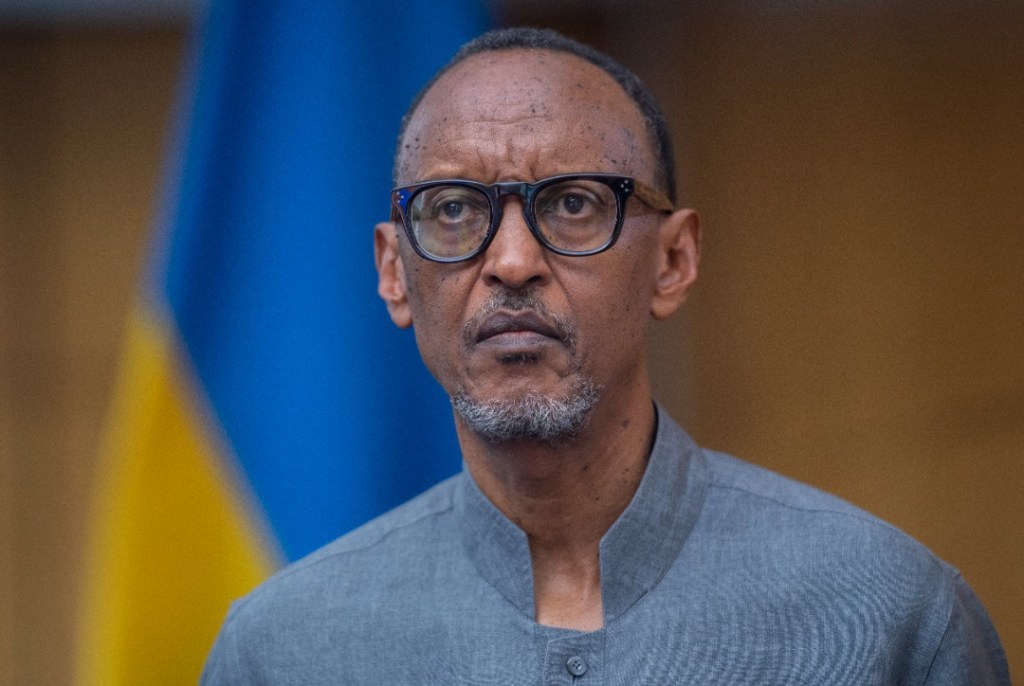
Is Kagame to be commended or condemned?
and why? which should be most telling.
Paul Kagame shut down over 6,000 churches and 100 mosques. Then he said the quiet part out loud.
He didn’t ban faith. He made it a regulated industry. The 2018 law requires every preacher to hold a theology degree. Every church must submit annual action plans aligned with “national values.” Every donation must pass through a registered bank account. Cash collections during services? Prohibited.
Kagame’s logic is simple. If you want to run a church, you need credentials. Like a doctor. Like a lawyer. Like anyone else handling money and trust.
He told a press briefing he wouldn’t reopen a single church. “Many are just thieving… some churches are just a den of bandits.” He told Rwandans to farm, raise cattle, pray on their phones.
The number of churches in Kigali alone shocked him. 700 in the capital. “I don’t think we have as many boreholes. Do we even have as many factories?”
Here’s what makes this viral. Kagame is not attacking Christianity. He is attacking the business model that turned faith into an extraction economy. Pastors who collected tithes, built personal empires, and left congregants with nothing but promises. He called out the fraud that anyone who has sat in a Nigerian or Kenyan church knows intimately.
But the power to decide which faith is legitimate is not a small thing. The theology degree requirement sounds reasonable until you ask: who accredits the theology? The 2018 law also requires churches to align with “national values.” That is a political standard, not a spiritual one.
A church leader in Kigali, speaking anonymously, said Kagame’s “open disdain and disgust” for churches “spells tough times ahead.” Another pastor said it plainly: “It is unfair that even those that fulfilled all requirements are still closed.”
Kagame’s argument has force. Fraud is real. Exploitation is real. But when the state decides what qualifies as a church, the line between protection and control disappears.
He didn’t close churches to stop people from praying. He closed them to stop people from being robbed in God’s name. Whether that’s protection or something else depends on who you ask.
original article (as far as I can tell) by Owairezioghene Ubuara Jasper


Blessings, my dear brother; it has been a while.
I am so pleased that you have broached this subject. I agree with the objective of making the Church community accountable and establishing reasonable standards of checks and balances in money handling and general stewardship. The robbery and the proverbial “Den of thieves” have persisted in the Caribbean and North American models, and our own Jamaica is no exception. To me, that’s a runaway-train robbery.
However, I do see your point about caution when it comes to regulation; history screams at us to beware of extremists [the French Revolution, Maoist Communism, etc.] around licensing and accreditation. But I have so much faith in the Holy Spirit’s work to build the House of God [the people] that I think if the government raises the bar, the church can only be purified. Yes, persecution has been the church’s best tutor for millennia. Regardless of what a government does or doesn’t do, if the people of God are placed in a crucible, we will only be purified. It is because we are so soulish and bent on ‘controling others and the manipulation of outcomes to meet our soulish plans and personal agendas why we can’t be MORE reliant on the Holy Spirit’s amazing ability to give us the wisdom, perspicaity and moral courage to rise to meet whatever Tsumani comes against us and to “walk on that very same water” and still arrive at the shores of salvation.
The persecuted church is the exception; I agree, but it only proves the point that those of us ‘at ease in Zion’ haven’t seen anything yet, and we need to get into alignment with the will and move of God in this hour, which is sanctification from worldly distractions. Yes, I’ve said it: the Western Church [me have to fling stone in my own backyard first] is decadent, debauched, materialistic and corupt. Many churches right now are only in name; they are just ‘the house that Jack built ’, and Jesus ’ name is being taken in vain in the nicest possible way, but it is NOT HIS WORK!
Now here is the clincher: could this move be the very work of God Himself because the cry of the poor has reached his ears? The socio-economic disparity between congregants and so-called church hierarchy is disgraceful. I have had to personally spend time counselling and dealing with much of the fallout of congregants losing their homes, marriages, etc., because the “tithe burden was too heavy. The irony is that these people have been left in the lurch and were not helped by the very church they had given faithfully to for years! How abominable!
So, in closing, I say God is sovereign, and Jesus made this promise in Matthew 16:18, where He tells Peter that on the rock He will build His church, and the gates of hell (or Hades) will not overpower it. And that is where I stick my knife in the sand. I stand adamantly behind that line. God is sovereign, and I believe that this is His doing and it is marvellous in my eyes. Jamaica needs a similar policy, as there are too many ‘plaza and patty shop churches’ popping up all over the nation, and they are not having any significant impact on the moral, spiritual or economic advancement of the people or their immediate communities. This is a crying shame on the Church that bears Christ’s name.
Keep up the good work.
Love and peace as always
Angela B. Slack
LikeLike
The robbery and the proverbial “Den of thieves” have persisted in the Caribbean and North American models, and our own Jamaica is no exception. To me, that’s a runaway-train robbery.
Yes, Angela its been a while. I appreciate the comments.
Actually, interestingly enough, however, Jamaica does seem to me an exception. The majority of churches in the Jamaican space are highly self regulated through denominational accountability structures, which is where the majority of our churches are located. And these structures work generally well. In fact, in some cases, one could make a case that some denominations are guilty of a new kind of exploitation – the exploitation of those called to the holy vocation. More about that later.
Yes, Independent churches, the type which arguably is most suspect for the kind of graft bespoken in the article, also feature in our local churchscape, but in no way as prominent either as in North America or Africa, where they feature significantly, and where mega church growth has often attracted deep suspicion. In the Jamaican space, these new independent churches generally are scattered and small (of the ‘plaza and patty’ shop variety) and what incidents of abuse there may be have not risen to any major consequence to impugn the faith.
No doubt there are several of those religious enterprises that need to be monitored, as the Kevin Smith debacle clearly revealed; and there is an initiative gaining steady traction in the Independent Churches of Jamaica to have all these new religious enterprises duly registered and submitted under its apostolic umbrella for purposes of the kind of accountability that is always preferrably dealt with in-house. It was a disgrace that the police had to intervene in the Kevin Smith situation, a disgrace I wonder if the current ICJ leadership has duly reflected on since last I checked, its new membership drive and accountabilty protocols were proceeding, but at half mast, in stead of full speed ahead. I’ve always maintained that the independent church sector is, at one and the same time, the most dynamic as well as disorderly of church groups in the Jamaican space. ICJ is a most welcome initiative and has its work cut out for it.
Actually, however, the vast majority of Jamaican clergymen are very far from the mould of religious privateers preying on the flock of God. Truth be told, maybe we do need a measured dose of ‘prosperity gospel’ here in Jamaica, for most clerics, including the majority who have not taken vows of poverty as a condition of their service are living as if they had, and salary checks and pension packages bear ample proof of this. Notwithstanding, there is a strong general committment to community and national service even without being required to submit any annual action plan in alignment with the NDP or the Vision 30 SDGs. Again, truth be told, in the Jamaican space there is a very active and healthy state / church partnership (even amidst all the boisterous criticism, a standard feature of healthy Jamaican culture).
Despite the overused caricatures, the greatest concern in the Jamaican space at present is not little demagogic pastors fleecing their relatively tiny flocks. Even the Revival Zion churches have now organized themselves into a national association. Our concern would be the Anglican church in particular (much moreso than Catholic, who in the Jamaican space mostly alligned themselves in the service of the poor) take more responsibility for its historic role in the oppression of the Jamican people. Compared to its historic assault, being integrally allied with the colonial status quo, its relatively modest contribution to the social uplift of the masses (in comparison to the considerable wealth and resources historically gained from deploying the classic business model that uses faith for establishing an extraction economy) could be seen as a brilliant PR campaign. Definitely not fruit of repentance. No true penitence. No real accountability. And every other church in Jamaica is implicated by association. This once State Church, even after disestablishment, still carries the offensive odor of plunder in the perception of many who were not coopted/seduced by her ‘education’ i.e. intoxicated with the wine of her fornication.
Calls for reparation in Jamaica need to target not only the British government but also the Church of England who together arrived in Jamaica hand in glove with but one intention; and that execrable abomination against the holy Name of Jesus Christ, for all their modified operations, still remains a glaring stain upon the church of Jesus Christ in Jamaica, and one that stinketh unto high heaven.
LikeLiked by 1 person